
What Our Daily Habits Are Really Costing the Planet
Convenience has become one of the defining features of modern life.
Everything is faster, easier, and more accessible than ever before. Food arrives in minutes. Products are delivered overnight. Nearly anything we need can be obtained with a few clicks.
But behind this efficiency lies a question we rarely stop to ask:
what is the true cost of convenience?
Not in price—but in impact.
Every system designed to make life easier relies on speed, scale, and constant production. And while these systems optimize for human comfort, they often place increasing pressure on natural resources, energy use, and waste generation.
The result is a lifestyle that feels effortless on the surface, but carries a hidden environmental footprint.
Single-use packaging, fast shipping, and disposable products are not isolated issues. They are part of a larger pattern—one that prioritizes immediacy over longevity.
And because these systems are designed to be seamless, the impact becomes invisible.
Products arrive without context.
Waste disappears without trace.
Convenience creates distance.
Earth Month invites a closer look at this relationship. Not to eliminate convenience entirely, but to understand it more clearly.
Because awareness changes how we interact with it.
Small shifts begin to emerge.
Choosing fewer, better-made items.
Reducing reliance on single-use materials.
Slowing down decisions instead of defaulting to instant options.
These changes do not require radical disruption.
They require intention.
Over time, repeated choices reshape behavior. And behavior, at scale, reshapes demand. As demand shifts, so do the systems that respond to it.
This is where individual awareness connects to collective impact.
Convenience is not inherently negative.
But when left unquestioned, it becomes automatic.
And automatic behavior is where impact accumulates.
Earth Month is a reminder to pause.
To look beyond ease and ask what supports not just our lives—but the systems that sustain them.
Because the goal is not to remove convenience.
It is to redefine it.
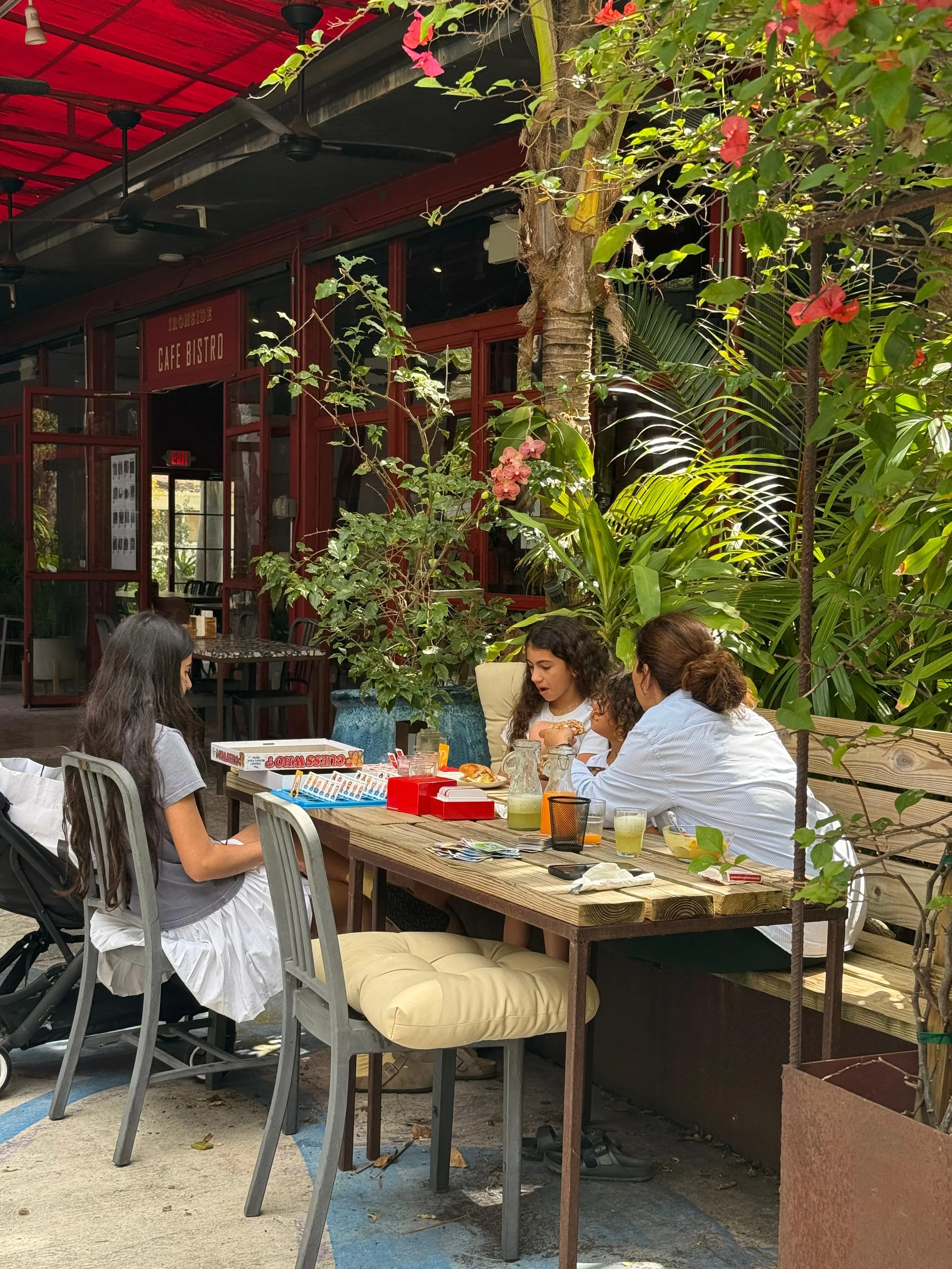
📍 Miami Ironside: The Longevity District
A creative and regenerative urban village where design, wellbeing, and sustainability converge.