
When you search for an event space for rent in Miami, you are looking at a wide spectrum — hotel ballrooms, raw warehouses, rooftop bars, gallery whites, and a handful of places that don't fit a specific category.
The honest answer is that the right space depends on what kind of gathering you are actually trying to create, not just how many people you need to fit.
The Actual Categories of Event Space Available in Miami
Miami's rental event market breaks down into a few honest categories. Understanding which category you're shopping in saves significant time.
Hotel ballrooms and convention spaces — large capacity, full-service staffing, generic aesthetic, corporate-friendly.
Raw warehouse rentals — low cost, high labor, you bring everything, no sense of place built in.
Restaurant and bar buyouts — intimate, food already present, but limited flexibility on timing, layout, and production.
Dedicated event venues — purpose-built or purpose-converted, variable quality, often sold as packages.
Cultural or institutional spaces — museums, galleries, gardens — distinctive but often restrictive in what they permit.
Mixed-use creative districts — like Miami Ironside — where the event space is embedded in a living neighborhood with existing food, retail, and community infrastructure.
Most searches for "event space for rent near me" return results from the first four categories. The last two are worth understanding separately, because they operate on different logic.
What a Hotel Ballroom Gets You — and Doesn't
Hotel ballrooms suit large corporate conferences, weddings that want turnkey execution, and events where the client's primary concern is logistics handled by someone else. The tradeoff is atmosphere — or rather, the absence of a distinct one. The room is designed to be neutral so it can be anything. That neutrality has value for some events and is a liability for others. If your gathering is meant to feel like something, a ballroom works against you from the first impression.
What Raw Warehouses Get You — and Don't
Raw warehouse space in Miami, particularly in neighborhoods like Wynwood, Allapattah, and Little River, can be rented at relatively low base costs. The catch is that they are genuinely raw — concrete floors, no HVAC to speak of, no permanent lighting rigs, no catering infrastructure. The production budget required to make a raw warehouse feel intentional is often larger than renters anticipate. Raw space suits production companies and large-scale experiential events that are bringing a full build with them. It does not suit a dinner, a board retreat, or anything that requires the room to do part of the work.
What Miami Ironside Gets You
Miami Ironside is a different proposition. It is an industrial warehouse complex that was reimagined rather than demolished — the architectural bones of Little River's warehouse history are intact, which means events held here carry a sense of place that neither ballrooms nor raw warehouses can manufacture. The district includes multiple configurable spaces, each suited to different event types.
Glassbox — a glass-walled architectural statement suited to productions where the structure itself is part of the visual.
Event Space — a dedicated venue for structured gatherings at meaningful scale.
Lemon Grove — an outdoor setting rooted in the landscape of the site.
Lounge — intimate, designed for smaller gatherings where conversation is the event.
Ironsbend — flexible configuration for events that don't fit a standard footprint.
Virtual Set — built for production, broadcast, and hybrid events where the physical space is also a media environment.
Outdoor Stage — open-air performance and gathering infrastructure already in place.
Gallery 62 — an art-forward environment with permanent works, including original sections of the Berlin Wall painted by street art pioneer Thierry Noir, displayed in the public piazza.
Because the spaces exist within a working district — not an isolated venue — events here have access to the surrounding food and retail community. The food tenants at Ironside are held to a specific standard: local sourcing, clean ingredients, no PFAS, no seed oils, no microwave. That standard matters for events where what people eat and drink reflects on the host.
Who Each Option Actually Suits
Who should book a hotel ballroom?
Organizations running large-scale conferences, weddings with 300-plus guests who want one vendor to handle everything, and any event where the primary measure of success is logistical execution without surprises. If atmosphere is secondary to capacity and service, a ballroom is rational.
Who should book raw warehouse space?
Production companies, experiential marketing agencies, and event producers who are bringing a full build — lighting, staging, catering, and décor — and need a blank canvas at scale. Not suited to clients who need the room to do work on its own.
Who should book Miami Ironside?
Events where the environment is part of the message. Brand launches, creative industry gatherings, wellness and movement events, film and media productions, cultural programming, and organizations whose values include sustainability and community.
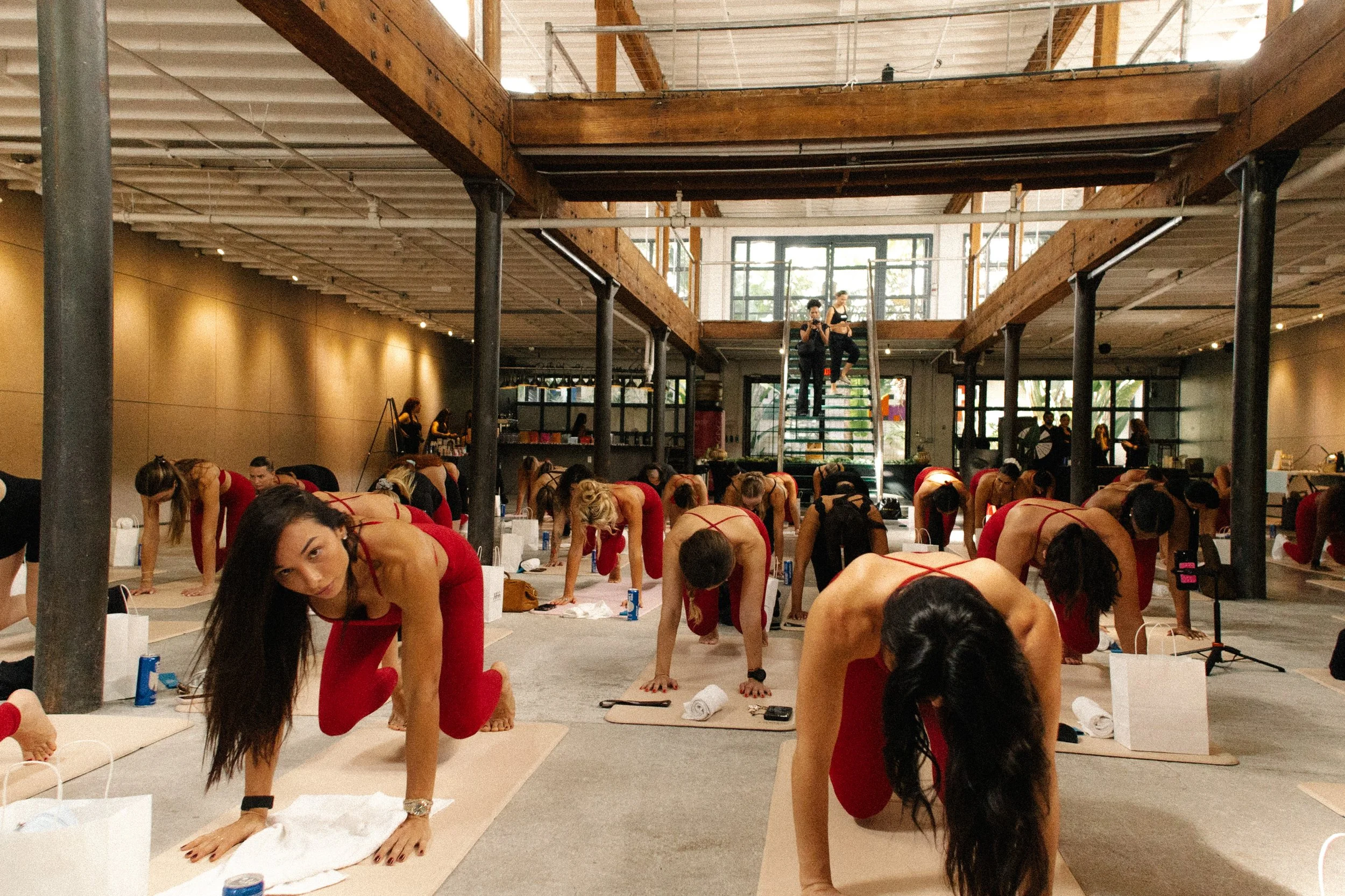
For example, Ironside has hosted events like the Daybreaker Worldwide Wellness Rave, covered by World Red Eye — an event that redefined what purposeful gathering looks like. The district's philosophy is regenerative and deliberate, which means it will resonate most with hosts whose gathering is also deliberate.
Truthfully, If you are renting a room to fill a room, there are cheaper options.
If you are choosing a place because the place itself communicates something, Ironside is built for that.
The Criteria That Actually Matter When Comparing Spaces
Atmosphere — Does the room do work before anyone arrives, or does it require complete transformation?
Infrastructure — What production elements are already in place versus what must be sourced and built?
Food and hospitality standards — Who controls what gets served, and to what standard?
Flexibility across configurations — Can one venue serve multiple phases of an event, or does the function determine the space?
Alignment with the event's values — Does the host's philosophy and the venue's philosophy reinforce each other?
Location and neighborhood context — Does the surrounding environment enhance or detract from the guest experience?
Most searches for event space optimize for capacity and cost first, then realize later that atmosphere and infrastructure are the variables that determine whether the event actually works.
Working backwards from those criteria — rather than forward from a per-head number — narrows the field quickly and honestly.
Little River as a Location
Miami Ironside sits in Little River, a neighborhood that has maintained its character precisely because the district operates on a preservation-first logic. The warehouse bones are original. The community around the venue is independent rather than chain-driven. For guests traveling to an event, the neighborhood itself is part of the experience in a way that a hotel corridor or an isolated event hall cannot replicate. For guests already in Miami, it is a destination that feels distinct from the more saturated corridors of Wynwood or Brickell.
A Word on Sustainability and What It Means for Events
Ironside's approach to construction — preserving the existing structure rather than demolishing and rebuilding — reduces construction waste and maintains embodied carbon already present in the buildings. That philosophy extends to the food tenants, to the materials on site, and to the kind of programming the district curates. For organizations whose events are meant to reflect a commitment to environmental responsibility, the venue's own practices are either aligned with that commitment or they are not. At Ironside, they are. That alignment is not a marketing claim — it is visible in the architectural decisions made before the first event was ever booked.
How to Decide
If your event is large, logistically complex, and needs a single vendor to manage everything under one roof with no surprises, a hotel conference center or ballroom is the rational choice and there is no shame in that. If your event needs scale and you are bringing a full production team with a complete build, raw warehouse space in Miami may serve you well. If your event is meant to feel like something — if the gathering itself is a statement about how people should come together, what they should eat, how a space can carry meaning — then Miami Ironside is worth a serious conversation. The spaces are distinct, the philosophy is consistent, and the venue does not try to be everything to everyone. That is, in itself, a kind of answer.
📍 Miami Ironside: The Longevity District
A creative and regenerative urban village where design, wellbeing, and sustainability converge.